
World Cup 2010 Best XI by Sofascore Rating

Najnowsze historie
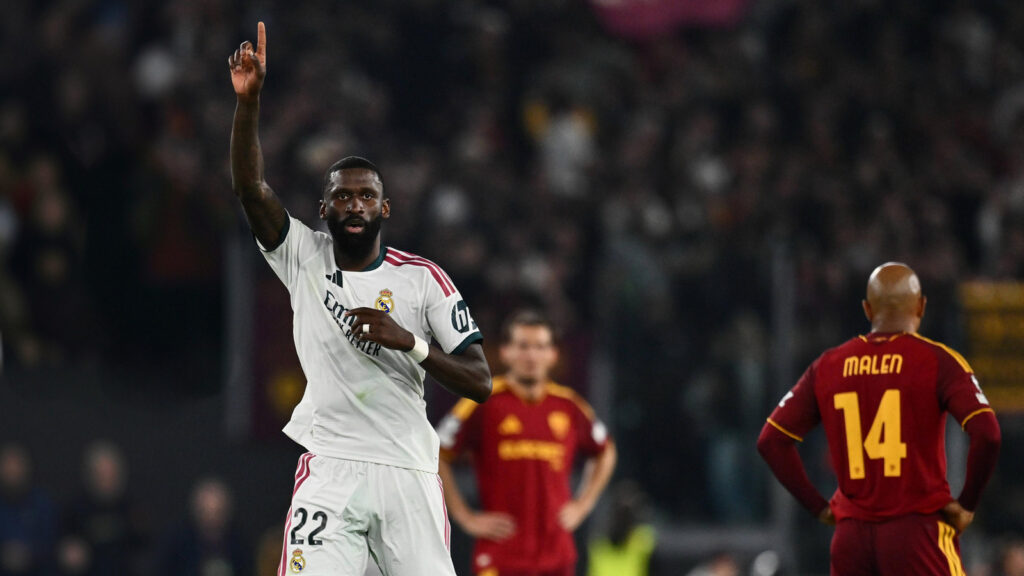
Roma-Real Madrid 3-4, shock comeback at the Olimpico: Malen not enough, Mourinho wins in the finale
14 paź 2026
PSG blitz stuns Man City 4-2 in Champions League
14 paź 2026
Real Betis 3-2 FC Porto: second-half surge and a late Isco penalty
14 paź 2026
Shakhtar 3-1 AEK Athens: Vinícius Tobias stars
14 paź 2026
Aston Villa 6-0 Fenerbahçe as Jackson shines
14 paź 2026
Slovan Bratislava 0-3 Stuttgart: control, chances and Chabot
14 paź 2026
Bodø/Glimt 1-0 Dortmund: Sjøvold’s left boot makes the difference
14 paź 2026World Cup 2010 Best XI by Sofascore Rating
The 2010 FIFA World Cup in South Africa gave us Spain’s first star above the crest and a final that stretched into extra time. Andrés Iniesta struck in the 116th minute in Soccer City to settle a fierce meeting with the Netherlands. It was a triumph shaped by a Barcelona core and a midfield that kept the ball moving almost by muscle memory. Using Sofascore Rating to look back, we built a Team of the Tournament that shows why that summer still feels unique.
Spain’s title, the Barça core and a midfield clinic
Xavi, Andrés Iniesta and Gerard Piqué headline the champions’ presence in this XI. Their Sofascore Ratings underline it too, with Xavi at 7.84, Iniesta at 7.80 and Piqué at 7.64. Spain suffocated games through control, with Xavi averaging crisp distribution and chance creation while Iniesta supplied the knockout blow in the final. Piqué anchored a back three in our lineup, reading danger and stepping out with the ball when needed. The Netherlands, led by Wesley Sneijder, pushed the final into extra time but could not break a Spanish side that conceded just two knockout goals. That loss was the Oranje’s third in a World Cup final after 1974 and 1978. It also capped a tournament where four players hit 5 goals: Thomas Müller, Sneijder, Diego Forlán and David Villa. Villa does not make this XI on Sofascore Rating, but his scoring run was vital to Spain’s route to the trophy.
From Kingson to Forlán, balance across the XI
Richard Kingson gets the gloves after a superb run for Ghana, reflected in a 7.38 Sofascore Rating and big saves in pressure moments. The three-man defense pairs Piqué with Brazil’s Juan (7.50) and Paraguay captain Paulo da Silva (7.38), a steady duo who quietly erased threats all month. Ahead of them sits a two-man engine: Xavi and Bastian Schweinsteiger (7.69). Schweinsteiger’s two-assist masterclass against Argentina summed up a Germany side that transitioned at top speed.
The four behind the striker read like a creative all‑star band. Thomas Müller (7.98) worked between the lines, Lionel Messi (8.12) bent games to his will, Wesley Sneijder (7.74) delivered clutch goals, and Iniesta stitched it all together. Up top, Diego Forlán (7.70) led Uruguay to the semifinals and took home FIFA’s Golden Ball. In our 3-2-4-1, that balance of control, movement and finishing power feels tailor‑made for how 2010 was actually won.

Sofascore Rating star: Messi’s all‑round masterclass without goals
By Sofascore Rating, Lionel Messi was the tournament’s top performer at 8.12. The curious twist is that he finished with 0 goals and 1 assist while Argentina bowed out in the quarterfinals. The numbers explain the verdict. He averaged 97.0 touches per game and 3.2 key passes, which led chance creation among forwards. He fired 6.0 shots and 2.4 on target per game and completed 5.4 successful dribbles, drawing 3.2 fouls a match. His duels won sat at 11.0 per game, showing the constant pressure he put on back lines. Passing stayed clean too, with 87% accuracy and 85% in the opposition half.
Watch his game log and the form pops: a 9.2 versus Nigeria, 7.8 against South Korea, 7.9 against Greece, 7.6 versus Mexico and 8.1 against Germany. It was a complete contribution across build‑up and chance creation, and Sofascore’s data captures it even without the headline stat.

Special focus: Thomas Müller, Best Young Player
At just 20, Thomas Müller walked away with the Golden Boot and Best Young Player awards. He scored 5 goals, supplied 3 assists and averaged a 7.98 Sofascore Rating. His tournament had two dips in the group stage, with 6.9 against Serbia and 6.6 against Ghana, which kept his average from climbing even higher. Then came a ruthless knockout run: 9.4 against England, 8.2 versus Argentina and 7.7 in the third‑place game against Uruguay.
The profile behind those numbers is classic Müller. He averaged 57.3 touches, 2.2 successful dribbles at 76% and 6.8 total duels won per match. His finishing was sharp with a 38% goal conversion and 5 of his 5 goals arriving inside the box. Add 1.8 tackles per game and 3.5 recoveries and you see a forward who worked as a first defender. It was movement, timing and output, all at once.

What this XI tells us about 2010
The best eleven tilts heavily toward midfielders and creators, which fits the feel of South Africa 2010. Spain controlled games through rhythm, not volume, and still produced two of the final’s defining performers. Germany pressed fast and broke with precision, with Schweinsteiger knitting it together and Müller finishing moves. Uruguay leaned on Forlán’s range and craft to punch above weight. Sneijder’s late runs and set‑piece quality carried a Netherlands team that came within minutes of penalties in the final.
Individual stories still matter in the data. Messi topping the Sofascore Rating without a goal is a reminder that influence is bigger than one column on the scoresheet. Kingson, Juan and da Silva show how stability at the back lets stars shine. And the four‑way race for the Golden Boot, with Müller, Sneijder, Forlán and David Villa on 5 goals, shows how spread the elite finishing really was. For more dives into historical tournaments and live football action, Sofascore has the scores, metrics and Sofascore Rating that bring context to every match.

Najnowsze historie
Roma-Real Madrid 3-4, shock comeback at the Olimpico: Malen not enough, Mourinho wins in the finale
14 paź 2026PSG blitz stuns Man City 4-2 in Champions League
14 paź 2026Real Betis 3-2 FC Porto: second-half surge and a late Isco penalty
14 paź 2026Shakhtar 3-1 AEK Athens: Vinícius Tobias stars
14 paź 2026Aston Villa 6-0 Fenerbahçe as Jackson shines
14 paź 2026Slovan Bratislava 0-3 Stuttgart: control, chances and Chabot
14 paź 2026
The 2010 FIFA World Cup in South Africa gave us Spain’s first star above the crest and a final that stretched into extra time. Andrés Iniesta struck in the 116th minute in Soccer City to settle a fierce meeting with the Netherlands. It was a triumph shaped by a Barcelona core and a midfield that kept the ball moving almost by muscle memory. Using Sofascore Rating to look back, we built a Team of the Tournament that shows why that summer still feels unique.
Spain’s title, the Barça core and a midfield clinic
Xavi, Andrés Iniesta and Gerard Piqué headline the champions’ presence in this XI. Their Sofascore Ratings underline it too, with Xavi at 7.84, Iniesta at 7.80 and Piqué at 7.64. Spain suffocated games through control, with Xavi averaging crisp distribution and chance creation while Iniesta supplied the knockout blow in the final. Piqué anchored a back three in our lineup, reading danger and stepping out with the ball when needed. The Netherlands, led by Wesley Sneijder, pushed the final into extra time but could not break a Spanish side that conceded just two knockout goals. That loss was the Oranje’s third in a World Cup final after 1974 and 1978. It also capped a tournament where four players hit 5 goals: Thomas Müller, Sneijder, Diego Forlán and David Villa. Villa does not make this XI on Sofascore Rating, but his scoring run was vital to Spain’s route to the trophy.
From Kingson to Forlán, balance across the XI
Richard Kingson gets the gloves after a superb run for Ghana, reflected in a 7.38 Sofascore Rating and big saves in pressure moments. The three-man defense pairs Piqué with Brazil’s Juan (7.50) and Paraguay captain Paulo da Silva (7.38), a steady duo who quietly erased threats all month. Ahead of them sits a two-man engine: Xavi and Bastian Schweinsteiger (7.69). Schweinsteiger’s two-assist masterclass against Argentina summed up a Germany side that transitioned at top speed.
The four behind the striker read like a creative all‑star band. Thomas Müller (7.98) worked between the lines, Lionel Messi (8.12) bent games to his will, Wesley Sneijder (7.74) delivered clutch goals, and Iniesta stitched it all together. Up top, Diego Forlán (7.70) led Uruguay to the semifinals and took home FIFA’s Golden Ball. In our 3-2-4-1, that balance of control, movement and finishing power feels tailor‑made for how 2010 was actually won.
Sofascore Rating star: Messi’s all‑round masterclass without goals
By Sofascore Rating, Lionel Messi was the tournament’s top performer at 8.12. The curious twist is that he finished with 0 goals and 1 assist while Argentina bowed out in the quarterfinals. The numbers explain the verdict. He averaged 97.0 touches per game and 3.2 key passes, which led chance creation among forwards. He fired 6.0 shots and 2.4 on target per game and completed 5.4 successful dribbles, drawing 3.2 fouls a match. His duels won sat at 11.0 per game, showing the constant pressure he put on back lines. Passing stayed clean too, with 87% accuracy and 85% in the opposition half.
Watch his game log and the form pops: a 9.2 versus Nigeria, 7.8 against South Korea, 7.9 against Greece, 7.6 versus Mexico and 8.1 against Germany. It was a complete contribution across build‑up and chance creation, and Sofascore’s data captures it even without the headline stat.
Special focus: Thomas Müller, Best Young Player
At just 20, Thomas Müller walked away with the Golden Boot and Best Young Player awards. He scored 5 goals, supplied 3 assists and averaged a 7.98 Sofascore Rating. His tournament had two dips in the group stage, with 6.9 against Serbia and 6.6 against Ghana, which kept his average from climbing even higher. Then came a ruthless knockout run: 9.4 against England, 8.2 versus Argentina and 7.7 in the third‑place game against Uruguay.
The profile behind those numbers is classic Müller. He averaged 57.3 touches, 2.2 successful dribbles at 76% and 6.8 total duels won per match. His finishing was sharp with a 38% goal conversion and 5 of his 5 goals arriving inside the box. Add 1.8 tackles per game and 3.5 recoveries and you see a forward who worked as a first defender. It was movement, timing and output, all at once.
What this XI tells us about 2010
The best eleven tilts heavily toward midfielders and creators, which fits the feel of South Africa 2010. Spain controlled games through rhythm, not volume, and still produced two of the final’s defining performers. Germany pressed fast and broke with precision, with Schweinsteiger knitting it together and Müller finishing moves. Uruguay leaned on Forlán’s range and craft to punch above weight. Sneijder’s late runs and set‑piece quality carried a Netherlands team that came within minutes of penalties in the final.
Individual stories still matter in the data. Messi topping the Sofascore Rating without a goal is a reminder that influence is bigger than one column on the scoresheet. Kingson, Juan and da Silva show how stability at the back lets stars shine. And the four‑way race for the Golden Boot, with Müller, Sneijder, Forlán and David Villa on 5 goals, shows how spread the elite finishing really was. For more dives into historical tournaments and live football action, Sofascore has the scores, metrics and Sofascore Rating that bring context to every match.