
World Cup 1998 Best XI by Sofascore Rating

Le ultime notizie
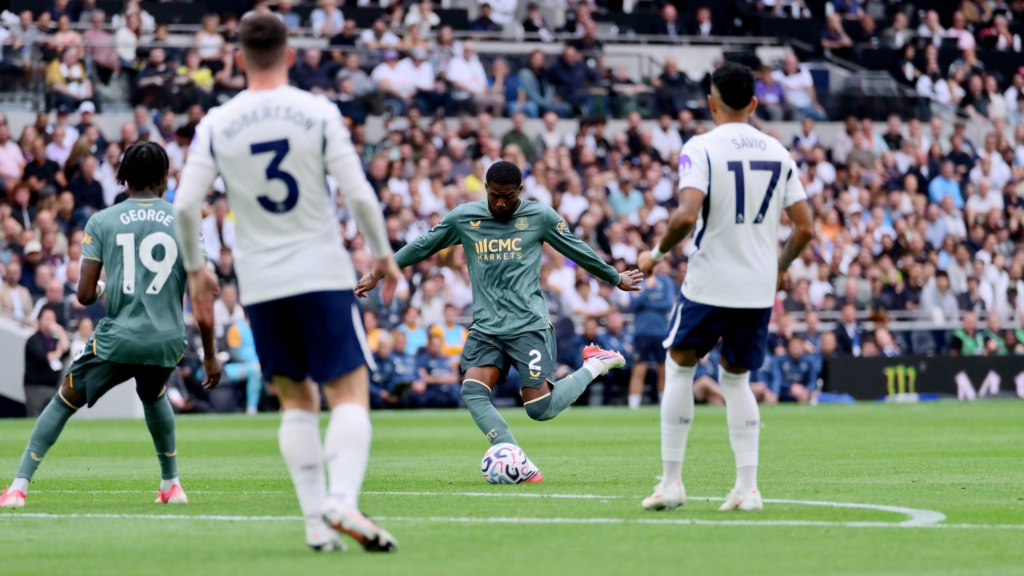
Tottenham 0-0 Everton: Garner spicca nel pareggio a reti inviolate
12 set 2026
Lazio-Milan 2-2, Moreira cambia tutto: doppietta in due minuti e rimonta rossonera
12 set 2026
Liverpool 0-0 Fulham: xG, parate e la prestazione di spicco di Jérémy Jacquet
12 set 2026
Crystal Palace 2-3 Ipswich: xG e Valutazione Sofascore
12 set 2026
Chelsea 2-2 Hull City: doppietta di Belloumi regala il pareggio
12 set 2026
Bournemouth 2-2 Brentford: la doppietta di Schade vale un punto
12 set 2026
Forest vince 2-1 a Villa: Muñoz 8.0 Valutazione Sofascore
12 set 2026World Cup 1998 Best XI by Sofascore Rating
It was a tournament full of storylines, late drama and iconic jerseys. To settle the “who were the best” debate, we leaned on data rather than nostalgia. Here is the World Cup 1998 Best XI built strictly by Sofascore Rating, arranged in a tidy 4-2-3-1. It spotlights consistency over seven matches, not only big moments. The result is an XI packed with France, Netherlands and Argentina standouts, plus familiar defensive steel from Italy and a classic German No 9.
A quick note on surprises. Croatia were the tournament’s sensation and finished third, yet they have no representative here. That underlines how well they functioned as a unit. Even the Golden Boot winner Davor Šuker with six goals averaged a 7.36 Sofascore Rating, which narrowly kept him out. Just as eye catching, Brazil reached the final but do not feature in this data-led XI. Ratings reward match-by-match output across all phases, and the numbers did the voting for us. You can explore every individual match card and trend line on Sofascore.

Back five built on reliability and big-game moments
– GK Gianluca Pagliuca (Italy) 7.62
– RB Lilian Thuram (France) 8.20
– CB Fabio Cannavaro (Italy) 7.70
– CB Frank de Boer (Netherlands) 7.84
– LB Bixente Lizarazu (France) 7.93
Pagliuca earns the gloves with the highest tournament average among goalkeepers in our pool, a nod to his safe hands and calm positioning over Italy’s run. In front of him, Thuram’s inclusion needs little explanation. He balanced top-tier defending with the most famous brace of his career in the semifinal, all wrapped in an 8.20 average. Cannavaro’s reading of danger and recovery pace translated into steady numbers every round.
On the left, Lizarazu offered both control and thrust. His 7.93 reflects clean defending and a steady supply of progressive passes. Frank de Boer completes the line with a 7.84, boosted by his distribution and set-piece quality that often started Dutch attacks. This back five mixes athletic full-backs with organisers in the middle, which fits the 4-2-3-1 brief neatly. It also explains why France and Italy allowed so few quality chances against them through the knockouts.
The engine room and wide creativity
– DM/CM Wim Jonk (Netherlands) 7.88
– DM/CM Juan Sebastián Verón (Argentina) 8.32
– RW Ronald de Boer (Netherlands) 7.88
– LW Ariel Ortega (Argentina) 7.86
– ST Oliver Bierhoff (Germany) 7.94
The double pivot reads smart and technical. Jonk’s 7.88 came from clean distribution and arriving in good areas, a nice foil for Verón. The Argentine conductor tops the central unit with 8.32, driven by progressive passing, chance creation and set-piece quality across Argentina’s matches. Wide right, Ronald de Boer posted 7.88 with tidy ball protection and link-ups that let the Dutch front line breathe.
On the left, Ortega’s 7.86 mirrors his constant carrying and one-v-one threat. He dragged defenders out of shape and fed runners between the lines. Up front, Bierhoff leads the line at 7.94, thriving on crosses and early deliveries. His hold-up play also graded well, a reminder that the 1990s No 9 job description required more than just finishing. In short, this group controlled tempo and supplied volume, which is exactly what the Sofascore data rewarded.
Zinedine Zidane, the standout of France 98
Zidane sits at the heart of this XI with an 8.36 Sofascore Rating, the highest among outfielders in our selection. He played five matches and 460 total minutes at an average of 92 per match, which tells you how central he was to Aimé Jacquet’s plan. Beyond the two headed goals in the final against Brazil, his tournament ledger shows two goals and one assist, four big chances created and 3.6 key passes per game. The ball lived at his feet, with 87 touches per match and 45.6 accurate passes at 81 percent. His long-range distribution popped too, averaging 5.2 accurate long balls at 79 percent and 5.0 accurate chip passes.
He drove France up the pitch with 3.0 successful dribbles per game at a 71 percent clip and recovered the ball 7.4 times per match, a tidy defensive contribution for a creator. He also averaged 2.0 tackles and won 1.6 aerial duels per game at 73 percent, which adds context to those two towering headers in the final. There was a red card earlier in the tournament, plus one yellow, yet his overall influence grew round by round. Put simply, the data and the eye test agreed in 1998. Zidane was the best player of the tournament and the best player of the final.

What this XI tells us about France 98
First, dominant teams often spread the load. France have three players here, yet their layout is balanced, not star-chasing, which mirrors their pragmatic path to the trophy. The Netherlands match that three-man presence thanks to elite build-up and wing play, while Argentina contribute two technicians who kept them purring between the thirds. Italy’s defensive core passes the consistency test, and Germany supply the classic penalty-box reference in Bierhoff.
Second, the notable omissions are instructive. Croatia’s fairytale is proof of collective synergy that outperformed most single-game numbers. Šuker’s 7.36 Sofascore Rating shows high-impact finishing, but this XI leans toward across-the-board contribution. Brazil’s absence, despite reaching the final, reflects a campaign where team stars had fewer complete, high-rated performances over multiple matches. Finally, the 4-2-3-1 shape that emerges from the data feels modern for 1998, driven by ball-playing defenders, dual controllers and a true No 10. If you want to dive deeper, every match timeline, heatmap and metric lives on Sofascore.
Le ultime notizie
Tottenham 0-0 Everton: Garner spicca nel pareggio a reti inviolate
12 set 2026Lazio-Milan 2-2, Moreira cambia tutto: doppietta in due minuti e rimonta rossonera
12 set 2026Liverpool 0-0 Fulham: xG, parate e la prestazione di spicco di Jérémy Jacquet
12 set 2026Crystal Palace 2-3 Ipswich: xG e Valutazione Sofascore
12 set 2026Chelsea 2-2 Hull City: doppietta di Belloumi regala il pareggio
12 set 2026Bournemouth 2-2 Brentford: la doppietta di Schade vale un punto
12 set 2026
It was a tournament full of storylines, late drama and iconic jerseys. To settle the “who were the best” debate, we leaned on data rather than nostalgia. Here is the World Cup 1998 Best XI built strictly by Sofascore Rating, arranged in a tidy 4-2-3-1. It spotlights consistency over seven matches, not only big moments. The result is an XI packed with France, Netherlands and Argentina standouts, plus familiar defensive steel from Italy and a classic German No 9.
A quick note on surprises. Croatia were the tournament’s sensation and finished third, yet they have no representative here. That underlines how well they functioned as a unit. Even the Golden Boot winner Davor Šuker with six goals averaged a 7.36 Sofascore Rating, which narrowly kept him out. Just as eye catching, Brazil reached the final but do not feature in this data-led XI. Ratings reward match-by-match output across all phases, and the numbers did the voting for us. You can explore every individual match card and trend line on Sofascore.
Back five built on reliability and big-game moments
– GK Gianluca Pagliuca (Italy) 7.62
– RB Lilian Thuram (France) 8.20
– CB Fabio Cannavaro (Italy) 7.70
– CB Frank de Boer (Netherlands) 7.84
– LB Bixente Lizarazu (France) 7.93
Pagliuca earns the gloves with the highest tournament average among goalkeepers in our pool, a nod to his safe hands and calm positioning over Italy’s run. In front of him, Thuram’s inclusion needs little explanation. He balanced top-tier defending with the most famous brace of his career in the semifinal, all wrapped in an 8.20 average. Cannavaro’s reading of danger and recovery pace translated into steady numbers every round.
On the left, Lizarazu offered both control and thrust. His 7.93 reflects clean defending and a steady supply of progressive passes. Frank de Boer completes the line with a 7.84, boosted by his distribution and set-piece quality that often started Dutch attacks. This back five mixes athletic full-backs with organisers in the middle, which fits the 4-2-3-1 brief neatly. It also explains why France and Italy allowed so few quality chances against them through the knockouts.
The engine room and wide creativity
– DM/CM Wim Jonk (Netherlands) 7.88
– DM/CM Juan Sebastián Verón (Argentina) 8.32
– RW Ronald de Boer (Netherlands) 7.88
– LW Ariel Ortega (Argentina) 7.86
– ST Oliver Bierhoff (Germany) 7.94
The double pivot reads smart and technical. Jonk’s 7.88 came from clean distribution and arriving in good areas, a nice foil for Verón. The Argentine conductor tops the central unit with 8.32, driven by progressive passing, chance creation and set-piece quality across Argentina’s matches. Wide right, Ronald de Boer posted 7.88 with tidy ball protection and link-ups that let the Dutch front line breathe.
On the left, Ortega’s 7.86 mirrors his constant carrying and one-v-one threat. He dragged defenders out of shape and fed runners between the lines. Up front, Bierhoff leads the line at 7.94, thriving on crosses and early deliveries. His hold-up play also graded well, a reminder that the 1990s No 9 job description required more than just finishing. In short, this group controlled tempo and supplied volume, which is exactly what the Sofascore data rewarded.
Zinedine Zidane, the standout of France 98
Zidane sits at the heart of this XI with an 8.36 Sofascore Rating, the highest among outfielders in our selection. He played five matches and 460 total minutes at an average of 92 per match, which tells you how central he was to Aimé Jacquet’s plan. Beyond the two headed goals in the final against Brazil, his tournament ledger shows two goals and one assist, four big chances created and 3.6 key passes per game. The ball lived at his feet, with 87 touches per match and 45.6 accurate passes at 81 percent. His long-range distribution popped too, averaging 5.2 accurate long balls at 79 percent and 5.0 accurate chip passes.
He drove France up the pitch with 3.0 successful dribbles per game at a 71 percent clip and recovered the ball 7.4 times per match, a tidy defensive contribution for a creator. He also averaged 2.0 tackles and won 1.6 aerial duels per game at 73 percent, which adds context to those two towering headers in the final. There was a red card earlier in the tournament, plus one yellow, yet his overall influence grew round by round. Put simply, the data and the eye test agreed in 1998. Zidane was the best player of the tournament and the best player of the final.
What this XI tells us about France 98
First, dominant teams often spread the load. France have three players here, yet their layout is balanced, not star-chasing, which mirrors their pragmatic path to the trophy. The Netherlands match that three-man presence thanks to elite build-up and wing play, while Argentina contribute two technicians who kept them purring between the thirds. Italy’s defensive core passes the consistency test, and Germany supply the classic penalty-box reference in Bierhoff.
Second, the notable omissions are instructive. Croatia’s fairytale is proof of collective synergy that outperformed most single-game numbers. Šuker’s 7.36 Sofascore Rating shows high-impact finishing, but this XI leans toward across-the-board contribution. Brazil’s absence, despite reaching the final, reflects a campaign where team stars had fewer complete, high-rated performances over multiple matches. Finally, the 4-2-3-1 shape that emerges from the data feels modern for 1998, driven by ball-playing defenders, dual controllers and a true No 10. If you want to dive deeper, every match timeline, heatmap and metric lives on Sofascore.